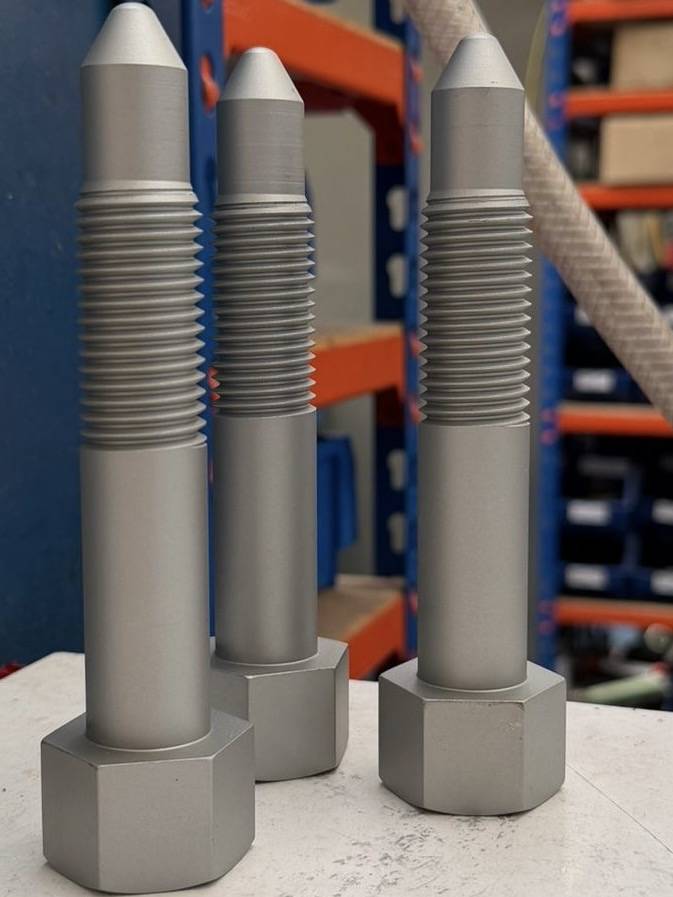
What is Embrittlement
Hydrogen embrittlement is a phenomenon that can occur in fasteners, such as bolts and screws, due to the presence of hydrogen atoms. This process can weaken the structural integrity of the fastener and lead to unexpected failures, which can have serious consequences. In this publication, we will examine the causes and effects of hydrogen embrittlement in fasteners, as well as potential prevention strategies.
Causes
The cause of hydrogen embrittlement in fasteners is the absorption of hydrogen atoms into the metal during manufacturing, processing, or service. Hydrogen can be introduced into the metal through various methods, such as pickling, electroplating, and welding. Once hydrogen atoms are introduced into the metal, they can migrate to areas of high stress concentration, such as the threads or the shank of the fastener. When the hydrogen atoms accumulate in these areas, they can create internal voids or microcracks, which can reduce the ductility and toughness of the metal. As a result, the fastener becomes susceptible to sudden fracture, even under normal loads.
The effect of hydrogen embrittlement in fasteners can be catastrophic, especially in safety-critical applications, such as aerospace, automotive, and construction. The failure of a fastener due to hydrogen embrittlement can lead to equipment malfunction, loss of structural integrity, and even personal injury or loss of life. Moreover, the damage caused by hydrogen embrittlement may not be immediately apparent, as the fastener can fracture without warning after a period of service. This makes it difficult to detect and prevent hydrogen embrittlement in fasteners.
Prevention – Baking
Preventing hydrogen embrittlement in fasteners requires a proactive approach that addresses the sources of hydrogen, the design of the fastener, and the selection of materials and processing methods. One common prevention strategy is to use low-hydrogen processes, such as electroless nickel plating or black oxide coating, that minimize the introduction of hydrogen into the metal. Another approach is to reduce the stress levels in the fastener by using larger diameters, smoother threads, and lower torque values. Additionally, designers can select materials that are less susceptible to hydrogen embrittlement, such as high-strength alloys with low hydrogen affinity.
Heat treatment baking is a common process used to prevent hydrogen embrittlement in high-strength fasteners. This process involves heating the fasteners to a specific temperature for a certain amount of time, which allows any hydrogen that has been absorbed by the metal to diffuse out of the material. The baking process is typically performed after the fasteners have been plated or coated with a hydrogen-absorbing material, such as cadmium or zinc.
During the heat treatment baking process, the fasteners are heated in an oven or furnace to a temperature typically ranging from 375 to 450 degrees Celsius (700 to 840 degrees Fahrenheit) for a period of several hours. The specific temperature and duration of the baking process depend on the type of material being used and the amount of hydrogen that needs to be removed.
The heat treatment baking process can be done using either a batch or continuous process. In a batch process, the fasteners are placed in a rack and then loaded into the oven or furnace, while in a continuous process, the fasteners are conveyed through the oven or furnace on a conveyor belt.
One of the advantages of heat treatment baking is that it is a relatively simple and cost-effective process that can be easily integrated into existing manufacturing processes. It is also a proven method for reducing the risk of hydrogen embrittlement in high-strength fasteners.
However, it is important to note that heat treatment baking is not always effective in preventing hydrogen embrittlement, particularly in cases where the fasteners are exposed to high levels of hydrogen during service. In such cases, alternative methods of preventing hydrogen embrittlement, such as the use of alternative materials or coatings, may be necessary. Overall, heat treatment baking is an important process for ensuring the safety and reliability of high-strength fasteners in a wide range of applications, particularly in industries such as aerospace, automotive, and industrial manufacturing.
Prevention – Materials
To help avoid hydrogen embrittlement, there are several materials and superalloys that are less susceptible to this phenomenon. Here are some examples:
Austenitic stainless steel: Austenitic stainless steel is a non-magnetic alloy that is resistant to corrosion and hydrogen embrittlement. It contains high levels of nickel and chromium, which provide excellent mechanical properties and resistance to environmental degradation.
Titanium alloys: Titanium alloys are known for their high strength-to-weight ratio, corrosion resistance, and resistance to hydrogen embrittlement. They are commonly used in aerospace, medical, and industrial applications.
Inconel alloys: Inconel alloys are a family of nickel-based superalloys that are known for their high temperature strength, corrosion resistance, and resistance to hydrogen embrittlement. They are commonly used in aerospace, marine, and chemical processing applications.
Monel alloys: Monel alloys are a family of nickel-copper alloys that are highly resistant to corrosion and hydrogen embrittlement. They are commonly used in marine and chemical processing applications.
Cobalt alloys: Cobalt alloys are a family of high-performance alloys that are known for their high temperature strength, wear resistance, and resistance to hydrogen embrittlement. They are commonly used in aerospace, medical, and industrial applications. It’s important to note that selecting the best material or superalloy for a given application depends on various factors, such as the operating conditions, the type of fastener or component, and the cost. Consulting with a materials engineer or a specialist in the field can help identify the best solution for a particular case.
Conclusion
In conclusion, hydrogen embrittlement in fasteners is a serious issue that can compromise the safety and reliability of equipment and structures. The causes of hydrogen embrittlement are multifaceted and can occur at various stages of the fastener’s life cycle. The effects of hydrogen embrittlement can be catastrophic, leading to sudden failure and potential harm to people and property. Prevention of hydrogen embrittlement requires a holistic approach that includes minimizing the introduction of hydrogen, reducing stress levels, and selecting appropriate materials and processes. By following these best practices, engineers and manufacturers can ensure the integrity and longevity of fasteners in critical applications.
Examples of Failures in Fasteners
- In 2019, a steel beam collapsed at a construction site in Melbourne, Australia, killing one worker and injuring several others. The cause of the collapse was determined to be the failure of a fastener due to hydrogen embrittlement. The fastener had been recently installed and had not been properly heat-treated, which contributed to its susceptibility to hydrogen embrittlement. (Source: ABC News, “Melbourne worksite collapse: One dead, two critical after scaffolding falls on them,” 23 November 2019)
- In 2010, a gas pipeline explosion occurred in San Bruno, California, killing eight people and causing significant damage to the surrounding neighborhood. Investigation revealed that the cause of the explosion was a rupture in a pipeline due to hydrogen embrittlement in a weld joint. The fasteners used in the weld joint were found to have absorbed hydrogen during the welding process, which led to their sudden fracture. (Source: National Transportation Safety Board, “Pacific Gas and Electric Company Natural Gas Transmission Pipeline Rupture and Fire,” Accident Report NTSB/PAR-11/01)
- In 2013, a fire broke out in a Boeing 787 Dreamliner parked at Heathrow Airport in London. Investigation revealed that the cause of the fire was a fractured titanium fastener that held the battery casing in place. The fastener had experienced hydrogen embrittlement, which weakened its structure and led to its sudden failure. (Source: Reuters, “Boeing says Dreamliner fire caused by faulty battery,” 20 March 2014)
- In 2017, a water tank exploded at a chemical plant in Louisiana, killing three workers and injuring several others. The cause of the explosion was determined to be a failed bolt that had experienced hydrogen embrittlement. The bolt had been recently installed and had not been properly heat-treated, which contributed to its susceptibility to hydrogen embrittlement. (Source: Chemical Safety Board, “CSB releases final report into 2017 fatal incident at the Packaging Corporation of America in DeRidder, Louisiana,” 29 October 2019)
- In 2017, the U.S. Navy issued a safety bulletin warning of the risk of hydrogen embrittlement in certain types of stainless steel bolts used in shipboard equipment. The bulletin cited several instances of bolt failures due to hydrogen embrittlement, including one incident where a bolt on a high-pressure air compressor failed, causing an explosion and injuries to sailors. (Source: Navy Safety Center, “Hydrogen Embrittlement in Bolts and Screws,” Safety Bulletin 17-01)
- In 2019, a bolt failure caused a roller coaster derailment at the Daytona Beach Boardwalk in Florida. The failure was attributed to hydrogen embrittlement, which weakened the bolt and led to its sudden fracture. Two riders were ejected from the coaster and fell 34 feet to the ground, suffering serious injuries. (Source: NBC News, “Roller coaster derailment caused by ‘excessive corrosion’ of support beam, state says,” 17 July 2019)
- In 2016, the roof of the Allianz Riviera soccer stadium in Nice, France partially collapsed due to the failure of several fasteners. An investigation revealed that the fasteners had experienced hydrogen embrittlement, which weakened their structure and led to their sudden failure. Fortunately, no one was injured in the incident. (Source: The Local France, “Nice stadium roof collapse due to ‘metal fatigue’,” 14 September 2016)
- In 2018, the roof of the Afsluitdijk road tunnel in the Netherlands partially collapsed, prompting its closure for several months. An investigation revealed that the failure was caused by the corrosion and hydrogen embrittlement of fasteners used to secure the roof panels. The fasteners had been exposed to high levels of saltwater and hydrogen gas, which contributed to their deterioration. (Source: NOS, “Afsluitdijk tunnel closed due to faulty bolts,” 17 January 2018)
- In 2016, a train derailment occurred in Mosier, Oregon, causing a crude oil spill and fire. Investigation revealed that the cause of the derailment was a broken bolt in the rail joint, which had experienced hydrogen embrittlement. The bolt had been manufactured using a high-strength steel that was susceptible to hydrogen embrittlement, and had been exposed to hydrogen during service. (Source: Federal Railroad Administration, “Railroad Accident Brief: Union Pacific Railroad Derailment,” Accident Report RAB-16-03)
These examples highlight the serious consequences in fasteners, and underscore the importance of taking preventive measures to minimize the risk of failure.